Getting Started with Trezor: Your Ultimate Guide
Introduction: Why Trezor is Essential for Crypto Security
In the fast-evolving world of cryptocurrencies, securing your digital assets is paramount. Trezor is one of the leading hardware wallets designed to protect your crypto from hacks, phishing, and other online threats. Unlike software wallets, Trezor stores your private keys offline, ensuring that your funds remain safe even if your computer is compromised.
This guide will walk you through the process of starting with Trezor, from unboxing to sending and receiving crypto safely.
Step 1: Choosing the Right Trezor Device
Trezor offers multiple models, primarily the Trezor One and the Trezor Model T. Understanding the differences is crucial before purchasing:
Trezor One: Affordable, simple, and highly secure. Supports most major cryptocurrencies.
Trezor Model T: Premium model with a touchscreen, supports more coins and advanced features, including Shamir Backup.
Consider your crypto portfolio and desired features before choosing a device.
Step 2: Unboxing and Initial Inspection
When your Trezor device arrives, ensure the packaging is intact. Trezor devices come with tamper-evident seals, guaranteeing the device hasn’t been altered during shipping.
Check for official Trezor branding.
Inspect the device for physical damage.
Keep all included accessories like USB cables and recovery cards safe.
Step 3: Setting Up Your Trezor Device
Connect your Trezor to your computer via USB.
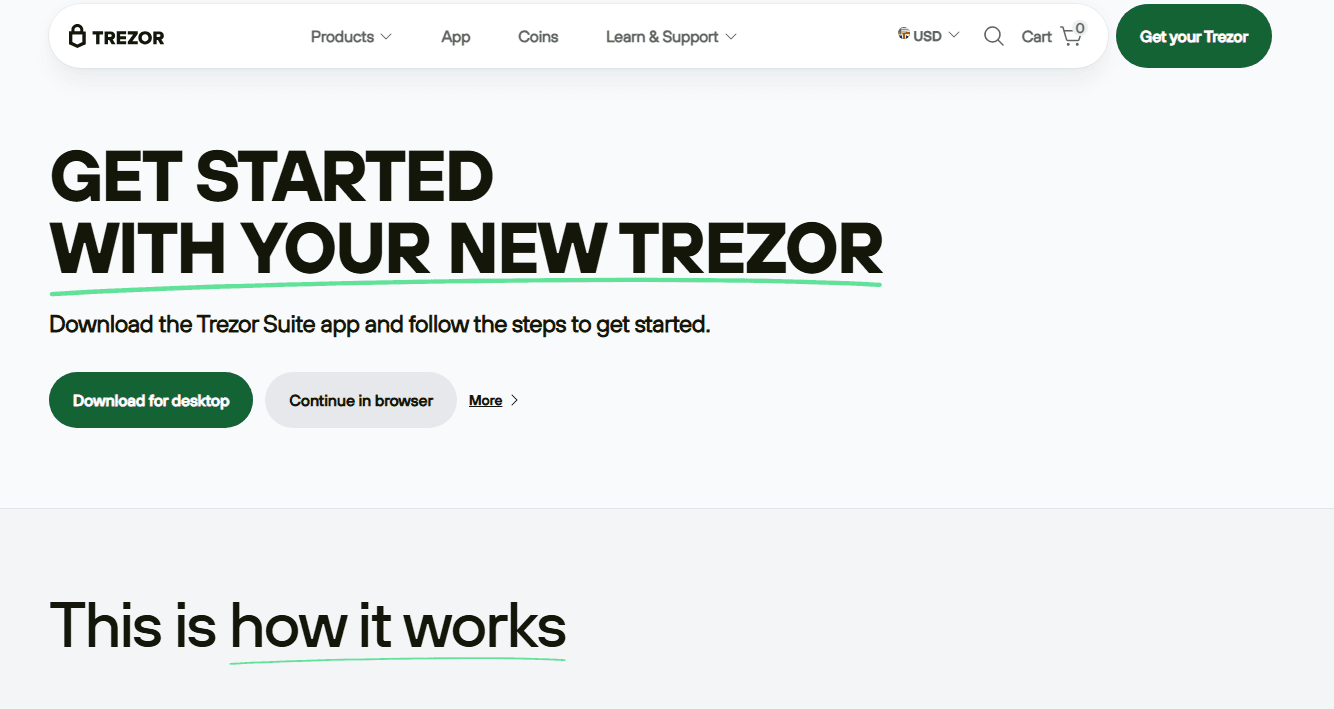
Visit Trezor.io/start.
Follow the on-screen instructions to install Trezor Suite, the official desktop and web application for managing your wallet.
Trezor Suite Features:
View portfolio balances
Send and receive cryptocurrencies
Manage multiple accounts
Update device firmware securely
Step 4: Initializing Your Wallet
When initializing your Trezor device, you will be prompted to create a new wallet or recover an existing one:
Create New Wallet: Generates a unique seed phrase.
Recover Wallet: Input your existing 12, 18, or 24-word recovery phrase.
Important Security Tip: Write down your recovery phrase on the included recovery card. Store it in a safe, offline location. Never share it online or store digitally.
Step 5: Setting a PIN Code
For an added layer of security, set a PIN code. This prevents unauthorized access even if someone physically acquires your device.
The PIN is required each time you connect Trezor to a computer.
Choose a strong and memorable combination. Avoid obvious sequences like
1234or birthdays.
Step 6: Firmware Updates
Trezor periodically releases firmware updates to improve security and functionality.
Connect your Trezor to Trezor Suite.
If an update is available, follow the instructions carefully.
Never use third-party software for updates to avoid compromising your device.
Step 7: Receiving Cryptocurrency
Receiving crypto is simple:
Open Trezor Suite.
Select the account for the desired cryptocurrency.
Click Receive to generate a wallet address.
Share this address with the sender.
Security Tip: Always verify the address on your Trezor device screen, not just on your computer, to prevent malware from altering it.
Step 8: Sending Cryptocurrency
To send crypto from your Trezor:
Open Trezor Suite and select the cryptocurrency account.
Click Send.
Enter the recipient’s address and the amount.
Verify transaction details on your Trezor device.
Confirm to execute the transaction securely.
Step 9: Using Trezor with Third-Party Wallets
Trezor is compatible with multiple third-party wallets for added functionality:
Electrum for advanced Bitcoin transactions
MetaMask for Ethereum and DeFi interactions
MyEtherWallet for Ethereum and ERC-20 tokens
Always connect Trezor to trusted wallets to maintain maximum security.
Step 10: Backup and Recovery
Your recovery seed is the most critical component of your crypto security:
Store the seed offline in a secure location.
Consider using fireproof or waterproof storage options.
Use Shamir Backup (Model T) for splitting the seed into multiple secure parts.
Recovery ensures that you can restore your funds even if your device is lost, stolen, or damaged.
Step 11: Advanced Security Tips
Regularly check for firmware updates
Avoid using public Wi-Fi when managing crypto
Never share your recovery phrase or PIN
Consider a secondary Trezor for multi-signature security
Following these practices maximizes your crypto safety.
Step 12: Exploring Trezor Suite Features
Trezor Suite is more than just a wallet interface:
Portfolio Tracking: Monitor all your holdings in one place.
Exchange Integration: Swap cryptocurrencies directly from Trezor Suite.
Privacy Features: Manage accounts anonymously without exposing your seed online.
Trezor Suite is continuously updated to provide a seamless user experience while maintaining top-tier security.
Conclusion: Secure Your Crypto Journey with Trezor
Starting with Trezor is straightforward, but security should always be your priority. By following this guide, you can safely set up, manage, and protect your cryptocurrencies.