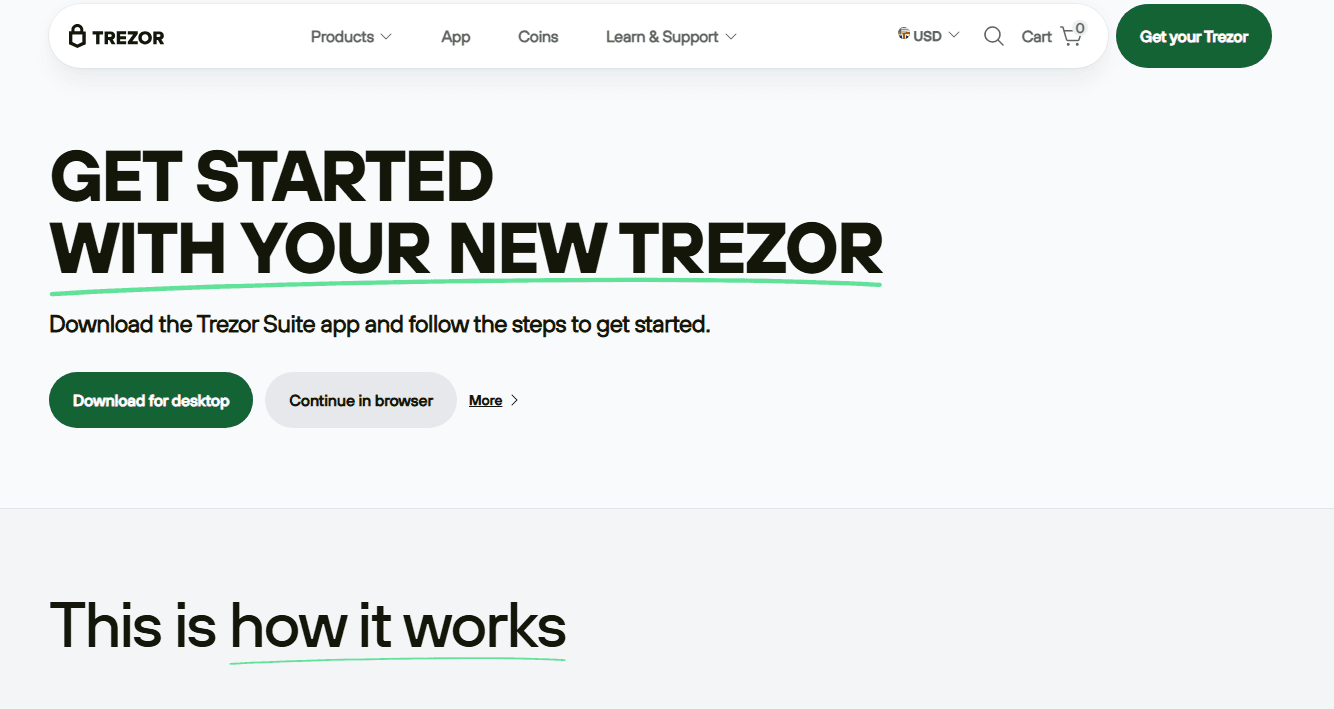
Getting Started with Trezor: A Complete Guide
1. Introduction to Trezor
Brief overview of Trezor hardware wallets.
Importance of secure cryptocurrency storage.
Why Trezor is trusted in the crypto community.
Key Points to Highlight:
Founded in 2013, first hardware wallet in the market.
Supports hundreds of cryptocurrencies.
Emphasis on user security and privacy.
2. Choosing the Right Trezor Device
Differences between Trezor One and Trezor Model T.
Factors to consider: supported coins, display, features, and budget.
How to decide which model fits your needs.
Key Points to Highlight:
Trezor One: Affordable, reliable, supports most coins.
Trezor Model T: Touchscreen, advanced features, supports more coins and password manager.
3. Setting Up Your Trezor Wallet
Step-by-step setup guide for first-time users.
Unboxing your Trezor device.
Connecting to Trezor Suite on desktop or mobile.
Key Points to Highlight:
Only download Trezor Suite from official sources.
Connecting via USB or Bluetooth (if supported).
Initialize as new wallet vs. restoring an existing wallet.
4. Creating a New Wallet
Generating a secure seed phrase.
Importance of writing down your 24-word recovery phrase.
Setting up a strong PIN for device security.
Key Points to Highlight:
Never share your recovery phrase.
Store it offline in a safe location.
PIN adds an extra layer of protection.
5. Restoring an Existing Wallet
Step-by-step instructions for wallet recovery.
Using a recovery phrase from another Trezor or compatible wallet.
Tips to avoid common mistakes during restoration.
Key Points to Highlight:
Wallet recovery is possible even if the device is lost or damaged.
Ensure no one watches while entering your recovery phrase.
6. Installing and Using Trezor Suite
Introduction to Trezor Suite software for managing crypto.
Features: sending, receiving, and tracking assets.
Connecting your Trezor device to Trezor Suite securely.
Key Points to Highlight:
Trezor Suite works on Windows, macOS, Linux, and mobile devices.
Interface designed for beginner-friendly navigation.
7. Sending and Receiving Cryptocurrencies
How to safely send funds from your Trezor wallet.
Receiving crypto with proper address verification.
Understanding transaction fees and confirmations.
Key Points to Highlight:
Always double-check addresses before sending.
Use Trezor Suite for fee recommendations.
8. Advanced Security Features
Passphrase protection for extra security.
Two-factor authentication (2FA) integration.
Multi-signature wallet setups for additional safety.
Key Points to Highlight:
Passphrase acts as an additional word to your recovery phrase.
Enhances security against device theft or compromise.
9. Maintaining Your Trezor Wallet
Updating device firmware safely.
Regularly backing up recovery phrase.
Avoiding phishing attacks and fake apps.
Key Points to Highlight:
Only update firmware via official Trezor Suite.
Keep backup phrase offline and in multiple secure locations.
10. Troubleshooting Common Issues
Device not recognized by Trezor Suite.
Forgotten PIN or passphrase recovery tips.
Support resources from Trezor.
Key Points to Highlight:
Restart device or computer if connection fails.
Contact official Trezor support for critical issues.
11. Tips for Safe Crypto Management
Regularly monitor your crypto holdings.
Avoid sharing sensitive information online.
Educate yourself about crypto scams and phishing.
Key Points to Highlight:
Never enter recovery phrase on any computer or website.
Enable all available security features.
12. Conclusion
Trezor is a secure, reliable way to manage crypto assets.
Emphasize proper backup, PIN, and security hygiene.
Encourage continuous learning about crypto security.